
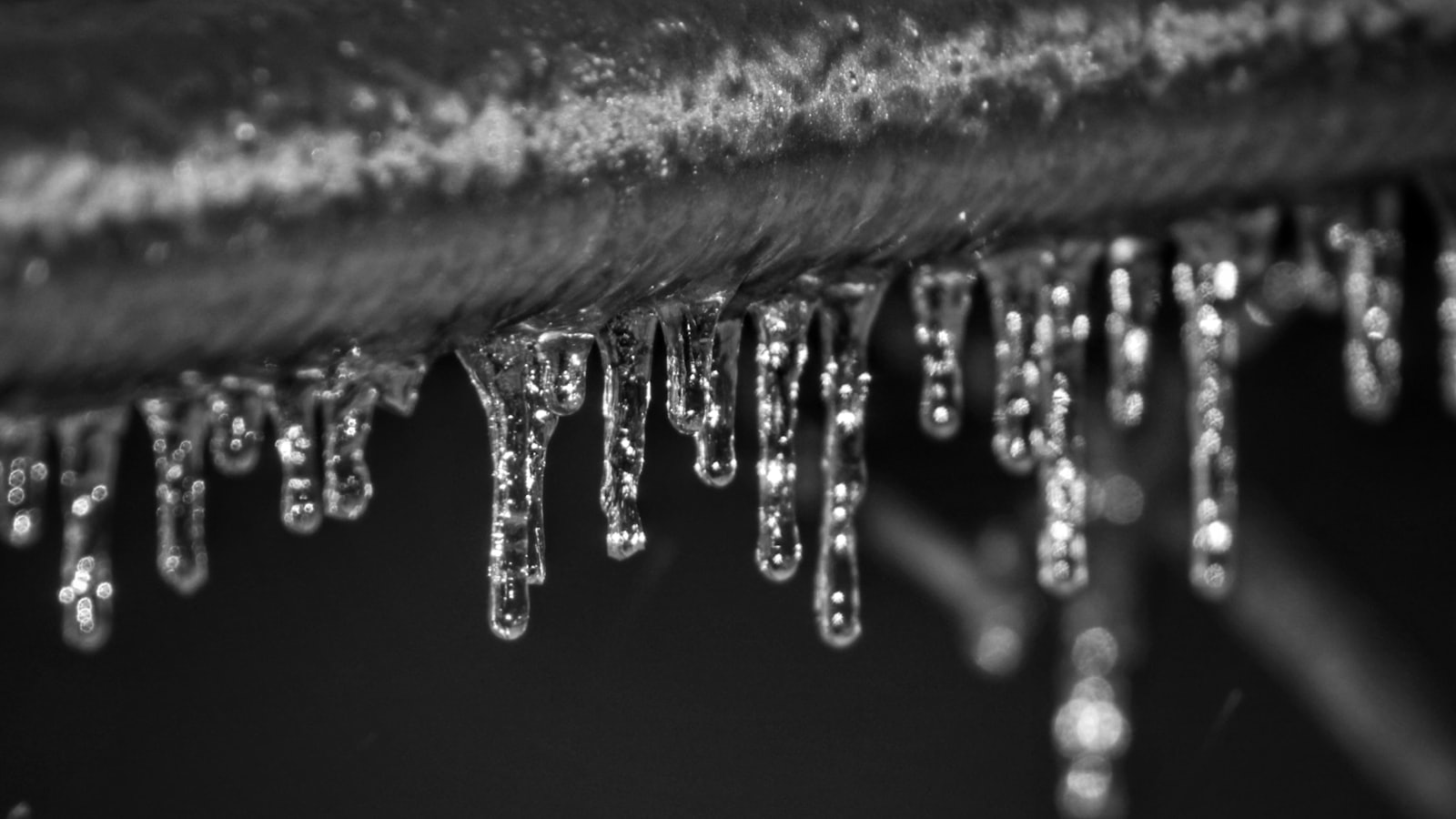
Frozen pipe in Edmonton? 5 things to do before it bursts
Find the frozen section, warm it safely, and get help before a frozen pipe turns into a burst-pipe emergency.
What to do, in order
Figure out where the freeze likely is
Common spots include under sinks on exterior walls, garage walls, crawlspaces, utility rooms, and poorly insulated basement runs.
Clues include frost on the pipe, a section that feels unusually cold, or a faucet that has little or no flow.
Open the affected faucet
If the line is frozen but not fully split, opening the faucet gives melting water somewhere to go as the pipe warms. It also helps you tell whether anything is changing.
Use the faucet served by that frozen section if you can identify it.
Warm the area gently
Use safe household heat: open vanity or sink cabinets, raise room temperature, or use a hair dryer on a low, controlled setting. Warm the pipe gradually, starting nearer the faucet side when possible.
Keep heat moving. The goal is gentle warming, not blasting one spot.
Watch for leaks as it starts to thaw
Sometimes the real problem only shows up once the ice begins to melt. If the pipe was cracked by expansion, dripping may start during thawing.
If that happens, stop thawing, shut off the water if needed, and treat it like a burst-pipe risk.
Get help if it doesn't thaw or starts leaking
If 15–20 minutes of safe warming is getting you nowhere, or the pipe shows signs of splitting, stop experimenting. Escalate when the pipe is still frozen after safe warming, you can't safely reach the suspected frozen section, or the line begins leaking while thawing.
What not to do
- Don't use a torch or open flame.
- Don't leave a space heater unattended beside combustible materials.
- Don't hammer or strike the pipe.
- Don't assume "no water" means the pipe is still intact.
- Don't overheat one tiny section while the rest stays frozen.
When it becomes urgent
- The pipe starts dripping or spraying.
- The line visibly bulges.
- You lose heat in a high-risk area.
- The frozen section is inside a wall or otherwise inaccessible.
- The weather stays extremely cold and the line is still blocked.
Edmonton context
Edmonton cold snaps make frozen pipes a recurring winter problem. The safest mindset: if it won't thaw safely and quickly, escalate before it becomes a flood.
Frequently asked questions
- Can I pour boiling water on a frozen pipe?
- Not directly on exposed metal or fittings as a main strategy. Rapid temperature shock isn't the safest approach.
- Should I leave the faucet dripping?
- A small drip can help prevent freezing in some situations, but once the line is already frozen, focus on safe thawing and monitoring.
- What if the frozen section is inside a wall?
- That's usually the point where DIY gets riskier and professional help becomes the smarter move.
- Does a frozen pipe always burst?
- No, but the risk increases the longer it stays frozen or thaws unevenly.